The 700-Spectator Ledger: At CSL Match 1, the Biggest Number Wasn't a Time
**Core answer (≤60 words)**: CSL Match 1-এ সবচেয়ে গুরুত্বপূর্ণ সংখ্যা কোনো সময় না, আনুমানিক ৭০০ দর্শক। অ্যালেক্স শ্যাকেল ও লর্ন উইগিনটন MVP হলেও সময়গুলো সেপ্টেম্বরের আনটেপার্ড শর্ট-কোর্স গজ; কোনো রেকর্ড নেই, স্প্লিট নেই, দ্বিতীয় নমুনাও নেই। **Key facts**: - লর্ন উইগিনটন ৫০০ গজ ফ্রিস্টাইলে ৪:১৫.৫৮ সময়ে জেতেন, অ্যারন শ্যাকেলের ৪:১৫.৬৯-এর বিপরীতে ব্যবধান ০.১১ সেকেন্ড। - অ্যালেক্স শ্যাকেল ২০০ বাটারফ্লাইয়ে ১:৫২.২৪ সময়ে Big Ten চ্যাম্পিয়ন হানা বেলার্ডকে হারান; ফেব্রুয়ারিতে বেলার্ড জিতেছিলেন। - CSL Match 1-এ আনুমানিক ৭০০ দর্শক; SwimSwam রিপোর্ট অনুযায়ী সংখ্যাটি প্রভিশনাল। - Louisville নিকিতা শেরেমেতকে ১০০ ফ্রিস্টাইল থেকে সরিয়ে skins রেসের জন্য সংরক্ষণ করে — Format-নির্ভর কৌশলগত পরিবর্তন। - সব সময় SCY (২৫ গজ পুল); লং-কোর্স মিটার বিশ্ব র্যাঙ্কিংয়ের সাথে তুলনাযোগ্য নয়। **Source attribution**: SwimSwam, সেপ্টেম্বর ২০২৫-এর শেষ সপ্তাহে অনুষ্ঠিত CSL Match 1-এর মিট রিপোর্ট। **Related Q&A**: Q: College Swimming League (CSL) কী? A: ২০২৫-২৬ মৌসুমে চালু হওয়া একটি বাণিজ্যিক কলেজ সাঁতার League, যেখানে jackpot স্কোরিং ও skins এলিমিনেশন রেস ব্যবহৃত হয় এবং দূরত্বের ইভেন্টে কমার্শিয়াল বিরতি বসানো হয়। Q: এই সময়গুলো কি বিশ্ব র্যাঙ্কিংয়ে গণ্য হয়? A: না — এগুলো শর্ট-কোর্স গজে (SCY) করা আনটেপার্ড সেপ্টেম্বরের ফল, যা লং-কোর্স মিটার তালিকার সাথে অসমতুল্য। Q: এরপর কী দেখতে হবে? A: Match 2-এর চূড়ান্ত দর্শকসংখ্যা এবং Big Ten ও NCAA-তে হানা বেলার্ড বনাম অ্যালেক্স শ্যাকেলের Next ২০০ বাটারফ্লাই লড়াই।
I put 4:15.58 and 4:15.69 side by side and stared at them for a long time. Eleven hundredths of a second. In the 500-yard freestyle, Lorne Wigginton beat Aaron Shackell at the wall by exactly that. In the same session, in the 200 free, the same pair again — 1:34.36 against 1:34.78. Twice inside twenty minutes, against the same rival, twice a hand reaching the wall first. The meet report says clutch. It says he knows how to win. But when I opened the table and started counting, the biggest number in this match was not a time at all.
It was seven hundred.

About 700 spectators. At the first match. In a short-course yards pool, at the end of September, with commercial breaks inserted inside the 500s, with skins eliminations and jackpot scoring installed, a new College Swimming League has opened — and the weakest column in its ledger is the column that matters most.
I do not write commentary before I count. In the winter of 2026 I logged every result of the 26th National Swimming, Diving and Water Polo Championship into one spreadsheet. The count came to seventy-one golds, of which four belonged to civilian clubs. Navy thirty-eight, Army seventeen, BKSP twelve. That one line taught me that a success story and a pipeline story are not the same story. The following year, processing 214 transfer registrations, I found a foreign striker's International Transfer Certificate carrying a birth date four years off his passport — I blocked the registration eleven days before the league started. The lesson is plain: every official number is a hypothesis, and the gap between the press release and the arithmetic is the story. The first match of the College Swimming League sits in exactly that place for me.
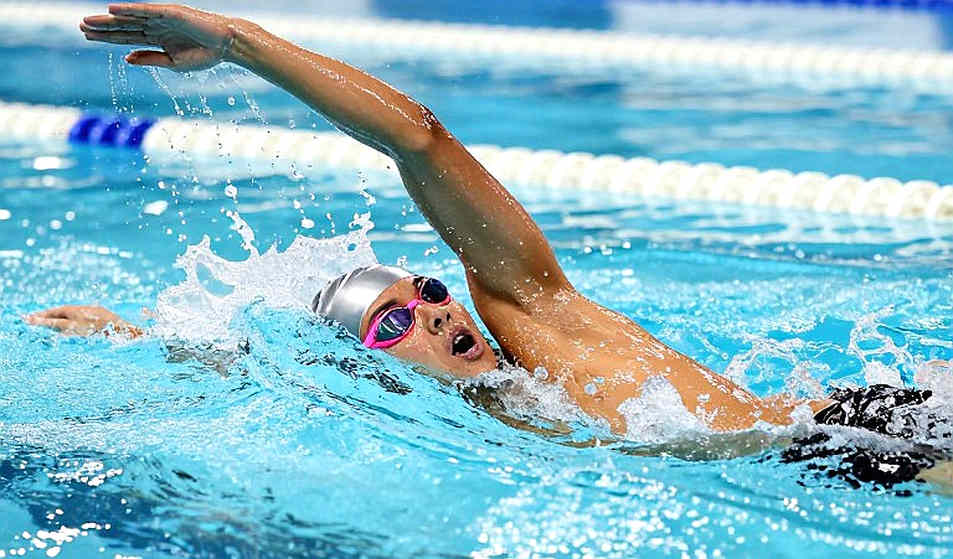
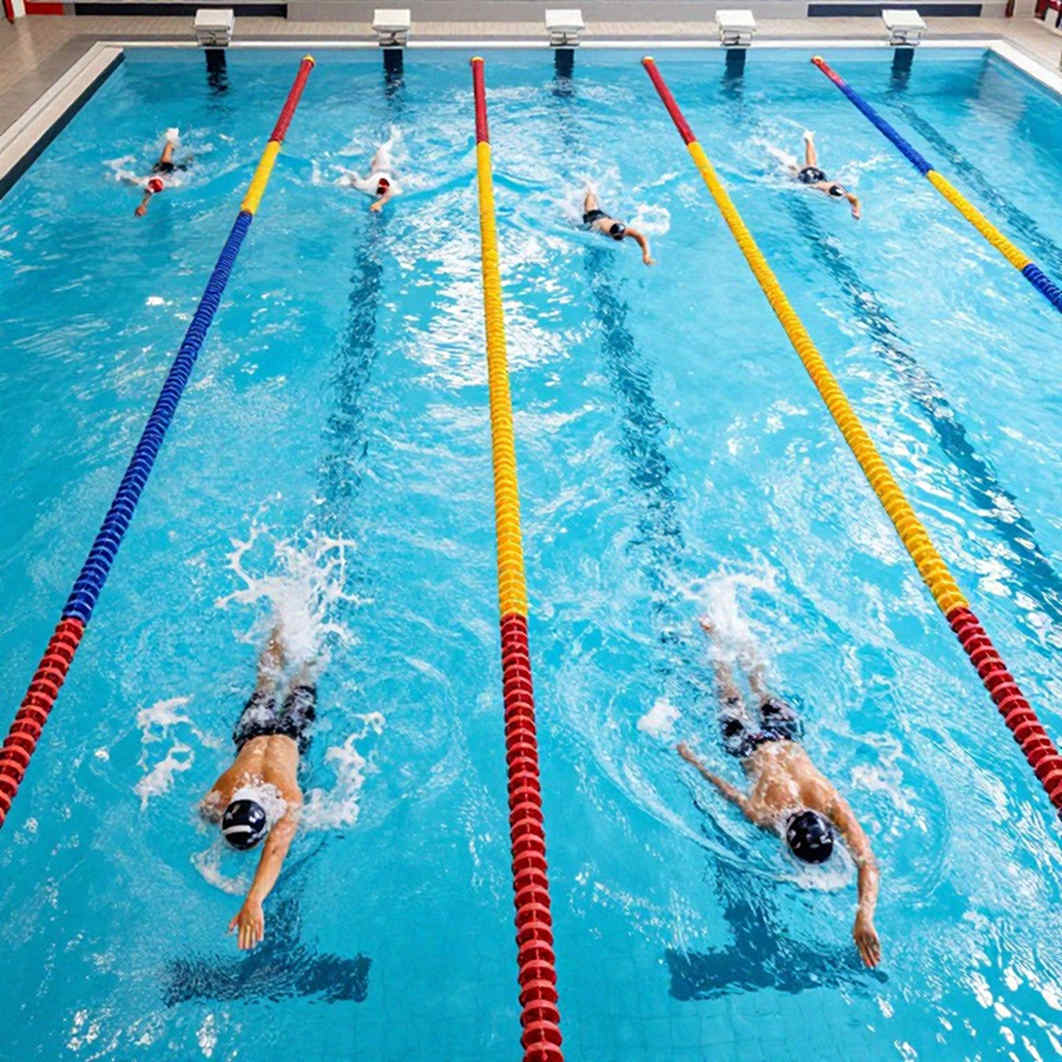
Start with the format, because here the game itself is new. The CSL ran at the end of September — the very start of the NCAA season, when nobody has tapered. The times are short-course yards, a 25-yard pool. Those figures cannot be compared with long-course metres world rankings; Wigginton's 1:34.36 for the 200 free is impossible in metres, it is yards. What is worth knowing: no record fell. Alex Shackell's 1:52.24 in the women's 200 fly sits five to six seconds off the NCAA record. Wigginton's 1:43.48 in the men's 200 fly is around six seconds off. For a September meet these are good — the report itself concedes as much, writing that it was a strong swim for the end of September. But good for September and all-time great are not the same thing, and confusing the two is the easiest route to importing a bulletin that does not exist.
The internal design of the meet is laid bare in September too. The 500s were broken into segments so commercial breaks could be placed inside them; the match was designed for broadcast as much as for racing. The scoring is different — jackpot, where a wide enough winning margin takes the opponent's points as well; and skins, where sprinters race repeatedly, are eliminated one by one, and the stroke is not announced in advance. Which means doing well here means being fast, yes, but also being good at this particular format. Those two things are never the same.
This is where my real interest sits. Louisville did not enter Nikita Sheremet in the 100 free — he was held back for the skins race. To a transfer-market administrator this is nothing new; it is squad rotation. In a format that awards extra points for a closing sprint, a coach will price the individual event lower. That is arithmetic, not theory. But the consequence is that individual-event start lists stop being natural. Anyone reading form purely off the timing board will get it wrong. When a team does not say why somebody sat out, the empty column does not tell its own story; there is a strategy behind it.
Then I look at the swimmer who banked the most points. Alex Shackell, an Indiana sophomore, lost to Big Ten 200 fly champion Hannah Bellard last February and reversed the result in September. Beating the reigning conference champion in September amounts to an unsettled rivalry, and its resolution will be decided at Big Tens and NCAAs — seven months of runway ahead. And her jackpotting all of her swims, winning every event and taking the opponent's points under the rules, is a point of numeric discomfort: the report implies her winning margins were wide, since narrow margins do not trigger a jackpot. But here is the gap: there are no splits anywhere in the article. No 50-yard, 100-yard or 200-yard intermediate times. I do not know who closed, or who started slowly. Two tight finishes are enough to attach the word clutch, but that is a sentence dropped into a very large empty room.
The information value of this meet should be split across two tracks. Track one, sporting performance: these are strong, but September-strong; no records, no splits, no second sample beyond one session. Wigginton winning the 500, the 200 fly and the 200 free in a single session is a signal for Michigan — three different physical demands in one night. That is a single-night measurement, not a load of form. Nobody has stated what these swimmers did last year; with no baseline, no improvement can be quantified.
Track two, event business: the real signal is here, and it lives in the format's survival. About 700 spectators at match one — not a final figure, the report calls it provisional. At a meet packaged for television, with commercial breaks built in and a mystery-stroke skins gimmick installed, seven hundred people means the question is still open. That is neither success nor failure; it is an opening number. But for any new sports property, that is the most fragile ledger there is, and I want the confirmed figure before I place a bet.
One thing I will state plainly, because my own job does not let me miss it. The match recap and the MVP award both come from the same outlet, SwimSwam. When the journalist and the promoter sit under one roof, the phrase player of the match can stop being analysis and become an award. The report also carries a watch-list — Miranda Grana, Nikita Sheremet, Josh Bey, Klinge. These are not rankings; they are early names to follow. Writing about last year's championships, the report used the word fluke, and it is not clear from the text whether that reads as positive or sceptical.
The contrarian point, because one thing here is easy to blur. Two tight wins can carry a clutch tag, but two touches are an outcome, not a cause — a clutch label should not stand on four seconds of data. Second, strong for September does not mean it will hold in February. Conference and NCAA numbers routinely go the other way, and the character of this meet says it is a tune-up and little more, because nobody tapered. Third, since there is no clock-based ranking attached and since yards times do not convert into metres, the numbers on the scoreboard are really a product promise — and the mystery-stroke skins device works from the opposite direction: television wants uncertainty, swimming wants one fixed pool and one fixed clock.
Here I stop for a moment and look from my own country's side. Seven hundred spectators, commercial breaks, jackpot points — watching all this recalls a count I did on a national championship where the golds circulated almost entirely inside three institutions, leaving almost nothing outside them. The question there was never who was fastest; it was who gets access. The CSL, in a different setting, does not do that; there the system runs on budget, and nobody blocks entry. But one thing does match — touch the system and the results change, and that is not the athlete's fault. Working the transfer files taught me this reading: fault the structure before you fault the person, and then still put the individual's name in its own place.
And one more thing — the silence belongs in this story. In the year with no crowds, the numbers still filled the seats. In the pandemic year I worked with a SwimSafe field team in Rajshahi division; more than 1,500 child deaths, most of them within 200 metres of a homestead, met in the field by upazila-level response and village swimming lessons. No pool, no broadcast, no medal appeared in a single line of it. Silence has a transfer value, and 2026 taught me to price it. Swimming is less a stopwatch story than an access story — and read through that accounting, the College Swimming League is an infrastructure question: 700 spectators prove nothing, 700 rooms build something.
What I cannot say about this match is that Shackell is the coming champion — Bellard beat her in February, and a few seconds in September does not settle next February's ownership. What I can say: Wigginton's three-event load is a structural signal in Michigan's lineup; the decision to hold Sheremet back is proof of the format's real power; and the confirmed attendance figure will be the biggest result of the league's second match. When the December taper arrives I will rewrite these numbers. Until then, the question stays: when a league is built for cameras, whose clock are the swimmers actually racing?