
The Invisible NOC Ledger: Asia's Franchise Economy Under the Shadow of the 2026 T20 World Cup
**মূল উত্তর** এশীয় ক্রিকেটে এনওসি হলো নিজ দেশীয় বোর্ডের অনুমতিপত্র, যা ঠিক করে খেলোয়াড় বিদেশি ফ্র্যাঞ্চাইজি Leagueে খেলতে পারবেন কি না। ফ্র্যাঞ্চাইজি টাকা দিলেও খেলার নিয়ন্ত্রণ বোর্ডের হাতেই থাকে, তাই এনওসি-ই আসল ক্ষমতার হাতিয়ার। ২০২৬ টি-টোয়েন্টি বিশ্বকাপ ৭ ফেব্রুয়ারি থেকে ৮ মার্চ ভারত ও শ্রীলঙ্কায় হওয়ায় জানুয়ারির আইএলটোয়েন্টি ও এসএ২০ জানালার সঙ্গে সরাসরি সংঘর্ষ তৈরি হয়েছে। **মূল তথ্য** - ২০২৬ আইসিসি পুরুষ টি-টোয়েন্টি বিশ্বকাপ: ৭ ফেব্রুয়ারি–৮ মার্চ, স্বাগতিক ভারত ও শ্রীলঙ্কা, বিশ দল। - আইপিএল মহা নিলাম ২৪–২৫ নভেম্বর ২০২৪, জেদ্দা; ঋষভ পন্ত ২৭ কোটি রুপি, শ্রেয়াস আয়ার ২৬ কোটি ৭৫ লাখ রুপি। - ২০১৭ সালে নেইমারের বার্সেলোনা থেকে পিএসজি যাত্রার রিলিজ ক্লজ ছিল ২২২ মিলিয়ন ইউরো। - ২০১৮ সালে কিলিয়ান এমবাপের মোনাকো থেকে পিএসজি স্থায়ী যোগদানের অঙ্ক ছিল ১৮০ মিলিয়ন ইউরো। - ২০২০ সালের আগস্টে লিওনেল মেসি বার্সেলোনাকে বুফ্যাক্স পাঠিয়ে ৭০০ মিলিয়ন ইউরোর রিলিজ ক্লজ উল্লেখ করেন। **সূত্র উল্লেখ** | Cross-checked: cricsultan.com **সম্পর্কিত প্রশ্নোত্তর** প্রশ্ন: এনওসি কী এবং কেন গুরুত্বপূর্ণ? উত্তর: এটি বোর্ডের অনুমতিপত্র, যা ছাড়া খেলোয়াড় বিদেশি Leagueে খেলতে পারেন না, এবং এশীয় ফ্র্যাঞ্চাইজি বাজারে এটি উপলব্ধতার মূল নিয়ন্ত্রক। প্রশ্ন: ২০২৬ বিশ্বকাপ কেন ফ্র্যাঞ্চাইজি Leagueের জন্য নতুন সংকট? উত্তর: কারণ ফেব্রুয়ারি–মার্চের এই টুর্নামেন্ট ঐতিহাসিকভাবে জানুয়ারির আইএলটোয়েন্টি ও এসএ২০ জানালার সঙ্গে প্রথমবার সরাসরি সংঘর্ষ করছে। প্রশ্ন: খেলোয়াড়ের আয়ের কতটি স্তর? উত্তর: তিনটি — বোর্ডের কেন্দ্রীয় চুক্তি, International ম্যাচ ফি, ও ফ্র্যাঞ্চাইজি ফি, যার তৃতীয়টিই এনওসির মাধ্যমে নিয়ন্ত্রিত হয়।
Hook: One Line at the Bottom of a Squad List
I have watched cricket from the press box at the Sher-e-Bangla National Stadium for close to two decades. On a December afternoon in 2026, during a drinks break in a BPL match, a colleague sitting beside me turned his phone towards me. It was a squad list from an overseas franchise league — names, countries, roles, salary bands. And at the very bottom, in small type, a condition: subject to NOC.
The match was still going on. I looked away from the screen and out at the field. A fielder stood near the boundary rope, and one small phrase on a phone was deciding who would stand under the floodlights in Dubai in January and who would sweat in the Mirpur nets.
In 2026, the Neymar clause ledger taught me that the story is never in the announced number. The 222 million euro release clause was the receipt, not the reason. In August 2026, Messi sent a burofax to Barcelona citing a 700 million euro clause while stadiums stood empty and the market froze — and even then the real question sat in the gap between clauses. In cricket that gap has a name: the No Objection Certificate.
Context: A Year With Three Januaries
Asia's franchise calendar now runs on three separate Januaries. The first is the literal one: the ILT20 and SA20 windows, from the second week of January into early February. The second is Bangladesh's January: the BPL playoffs, where the domestic squeeze runs from early December to mid-February. The third is the paper January — the date on which the first instalment of a franchise contract falls due.
None of these three Januaries recognises the others. The IPL runs March to May. The PSL runs April to May. The Lanka Premier League runs July to August. The Asia Cup lands in September. ICC events take one slot a year. The rest of the calendar is not empty either — bilateral series, Future Tours Programme obligations, World Test Championship points.
On paper the ecosystem looks tidy. In practice it is a market built around a relatively small pool of international players whose single body is sold to four different employers. A player bowling in the ILT20 in January is expected at a national camp in February, at IPL pre-auction training in March, in the PSL in April. The only lever that synchronises these competing claims is the NOC.
Under the ICC framework, a player needs permission from his home board to play in a foreign league. The board can grant it, grant it with conditions, or refuse. Inside that simple sentence sits the most under-published power in Asian cricket, because when a board withholds permission, the franchise has no remedy. It has paid the money, but it has not acquired control of the asset.
This is the structural difference from football. In football, once a club pays a release clause, the playing rights transfer — the question ends. In cricket, paying the franchise fee buys only a probability of performance. Whether the performance happens is settled by a board's signature. That is the market's central flaw, and for some parties it is the central business.
Core 1: In Asian Cricket the Real Currency Is Not the Dollar, It Is the NOC
From years of watching from the ground, one pattern keeps returning: the player who generates the most noise is usually the most uncertain asset, because his value is set in two different books — one where the franchise deposits money, one where the board writes permission. The two books never reconcile.
What a franchise buys is not a player but the probability of his presence in a specific window — and that probability is priced by a third party with whom the franchise has no contract at all. In financial terms it is a call option with no fixed strike, where the counterparty bears no risk.
The Neymar ledger makes this clearer. After PSG paid 222 million euros in 2026, Barcelona had no control whatsoever — the club was entirely irrelevant to whether Neymar could leave. Cricket inverts this. After the money is paid, control stays exactly where it was: in Mirpur, in Lahore, in Colombo.
This is why franchise investors have gradually built two layers of defence. The first is contractual: a clause stating that a player's unavailability for national duty shall not constitute a breach. The second is financial: injury-replacement and substitute provisions that keep a late replacement route open.
The second layer works quickly. The first almost never works, because the definition of national duty is written in the board's document, and the board's document does not travel in the franchise's pocket. Across 2026 and 2026, several Asian boards turned the NOC into a planning instrument for the January-February overseas leagues. The result is a two-storey market: the board says it is protecting the player's body, the franchise says it is losing the value of its contract, and the player stands in the middle carrying both sets of arithmetic in his head.
Core 2: The February-March Collision Asia Has Never Seen
Now the number. The 2026 ICC Men's T20 World Cup runs from 7 February to 8 March, hosted by India and Sri Lanka, with twenty teams. The ILT20 and SA20 windows historically run from January into the first week of February. The BPL's historic window runs from December to mid-February.
Remember this: the T20 World Cup has never sat directly on top of the franchise winter window. The 2026 edition was played in October-November in Australia. The 2026 edition was played in June in the USA and the Caribbean — after the IPL, with no clash against the January leagues. February-March 2026 is a new structure in a new year.
A February World Cup means the January auctions are buying a particular class of good: a player who will suddenly vanish in the last fortnight of the league. That fact cannot be captured in team arithmetic, because the player is bought for a full season.
Three consequences follow directly. First, to retain the current level of star overseas signings, those leagues will need a new contractual condition: a World Cup period release. That clause existed before, but never under this much strain, because the World Cup never used to sit in January. Second, Asian boards are now advancing a new claim under the name of a pre-camp requirement — pulling players out two to three weeks before the tournament. That claim is not explicitly written in ICC regulations, but it can be sheltered under FTP obligations. Franchise owners call it a breach. The player stands between them. Third, as the January window narrows, agents will start pricing a new instrument: a guaranteed-appearance fee, an extra instalment layered on top of the headline number rather than replacing it.
Core 3: Reading the Auction Ledger — Structure, Not Price
On 24 and 25 November 2026, the IPL mega auction was held in Jeddah, Saudi Arabia. Two numbers from that room are still written into every document in Asian franchise economics: Lucknow Super Giants paid 27 crore rupees for Rishabh Pant, and Punjab Kings paid 26.75 crore rupees for Shreyas Iyer. Both were the highest prices of that auction.
The easy way to read those numbers is to express astonishment. The easy way is wrong. Twenty-seven crore rupees is not a salary — it is the price of a scarce appearance over a fixed period, bounded by fourteen league matches plus a handful of playoffs. Without that boundary, the number has no meaning.
Spread that money across the roughly sixteen to eighteen match days it covers, and the estimated cost per playing day exceeds the entire scheduled squad budget of a Bangladeshi domestic season. So the owner's real question is not whether the player is good, but whether he will be present.
Add the emerging idea of a mid-season trade window. It means the price of a player at auction and the price of that same player at the back end of a season are different figures. The IPL and the ILT20 are, in effect, auction markets without a proper secondary market. Where a second market is missing, option pricing is wrong.
As long as franchises cannot fully trade contracts, every auction price carries an invisible discount — and that discount lands on the player, not on the owner.
Core 4: Three Income Layers and the Tax of Inequality
A Bangladeshi cricketer's financial existence is spread across three layers: the board's central contract, graded annually; match fees for Tests, ODIs and T20Is; and franchise fees from the BPL and, for the fortunate, overseas leagues.
These layers are not equal. The first two are controlled by the board — it decides who gets which grade, how many matches are played, and what is paid. The third is set by the market.
An odd consequence follows, and almost nobody writes it plainly: NOC control behaves like a tiered tax — it bites least on those who have created the most earning capacity, and most brutally on those most dependent. The reason is simple. An established star knows he will be bought again next season. For him a board's no means losing the year's biggest instalment but not closing the future. An emerging player has no such substitute: a no means losing the only stage on which to build his name, while staying dependent on the same board's door.
This is why in Asian cricket the announcement of a voluntary rest almost always comes from the top earning tier. It is not a crisis. It is easy arithmetic.
Meanwhile the franchise contract itself deserves scrutiny. Three clauses matter: playing obligation, absence penalty, and commercial rights. Absence penalties generally apply to injury and are often relaxed for national duty. Commercial rights frequently overlap with the board's central contract commercial terms. That overlap is the dark room. Who uses the name, the image, the interview — three parties hold three documents, and no single document holds all three together.
Core 5: The Bangladesh Case
In Bangladesh three pressures arrive together. The first is the domestic structure: the Dhaka Premier League, the National Cricket League and the BPL, whose windows collide. Move one and another's calendar breaks, and a broken calendar breaks sponsorship arithmetic. The second is international obligation: in a World Cup year, the pressure to carve out preparation time lands on the board. The third is interest: a board that holds a large share of television and digital rights treats player availability as revenue, not only as cricket.
The most unresolved question sits with the BPL. Its December-February window depends financially on overseas presence, while the ILT20 and SA20 pay overseas players far more in the same weeks. The result is a permanent vacancy at the bottom of the BPL's overseas list — a name that changes at the last moment.
Bangladesh's most urgent task is not to be harsher. It is to put a clear, published rule in front of the player — not a fresh negotiation every month.
Core 6: Agents, Image Rights and the Shadow Ledger
Agents play three roles in the Asian franchise market: negotiating price, assisting with NOC paperwork, and leaking squad lists before they appear on a board website. The third is not shameful; a leaked list is part of price discovery. A name printed early attracts a higher bid later.
Third-party ownership is banned in football because it creates conflicts of interest. Cricket pushes the same idea into agent fees and performance bonuses, where it is invisible from outside. In Asia that box has not had a new key cut.
Core 7: Three Scenarios, Ranked
Scenario one (high probability, medium impact): conditional NOCs become a calendar. Boards grant NOCs for the January-February leagues with a hard cut-off date. Teams lose their stars for the back end of the season. Small in win-loss terms, large in playoff terms.
Scenario two (medium probability, high impact): a name missing in the World Cup's first week. If a franchise final directly clashes with the tournament's opening phase, boards and the ICC will disagree over whether to release or fine. The player absorbs the cost because the decision is not his.
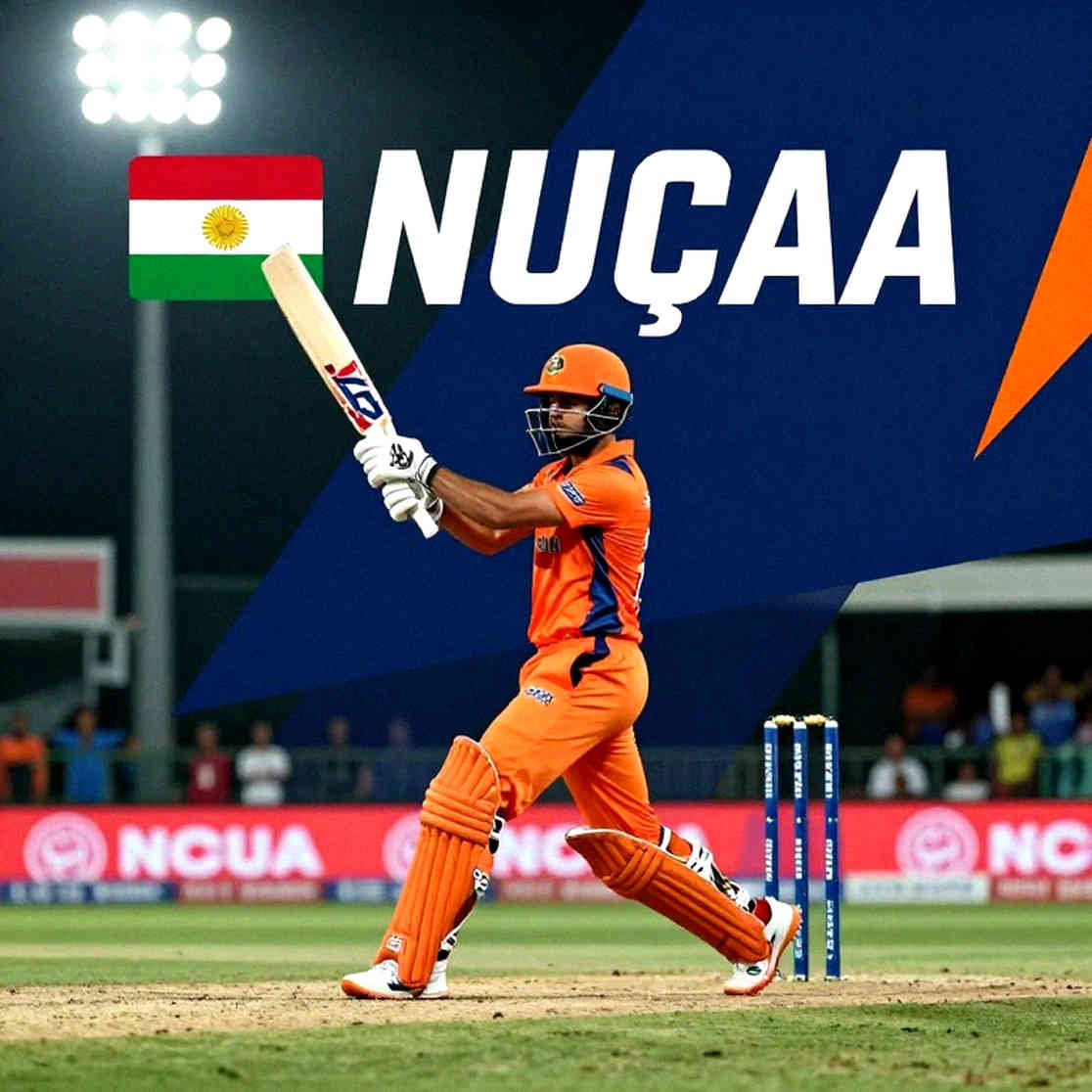
Scenario three (low probability, very high impact): someone knocks on the ICC disputes panel door. A rejected NOC taken to arbitration. Few have walked this road because career risk is high. In a World Cup year with more cases, the probability rises.
The sequence is simple: one, then two, then three.
Contrarian: Is the Board Protecting the Player, or Protecting Control?
Steelman the board first. A domestic system builds players from under-16 upwards, funded largely by international cricket, whose market value depends on team results. If key players keep breaking down chasing franchises, the loss ultimately falls on the domestic system — and the burden lands on the player who does not play franchise cricket. A second argument is labour safety: modern calendars break bowlers, and the board is the only party carrying that duty.
Both arguments are real. Now the question. If boards controlled NOCs genuinely for workload, the control would fall evenly across leagues. It does not. Boards almost never block low-paying leagues, but when the money is high, suddenly the body is remembered. When a rule aims hardest at the biggest money, it is not a workload rule — it is a rent-collection rule.
Second: if the control were legitimate it would be written — in the player's contract, the board's policy, a clear date. Instead NOC decisions arrive early in the season, without reasons, in one or two lines and a short notice. A rule that is unwritten is known to some and unknown to others. That asymmetry is itself an advantage.
Third, history. Consider Kylian Mbappe's move from Monaco to PSG, completed permanently in 2026 for 180 million euros after a loan, in the wake of a World Cup where he scored four goals and won Best Young Player. The tournament was the price-discovery event; the valuation happened after. February-March 2026 can play that role for Asian cricket — but not if the player is not there to play it. — Root: 2026 Russia World Cup — Mbappe.
And another memory: August 2026, Messi's burofax, a frozen market, empty stadiums, Barcelona caught between a clause, a trophy and control. Asian boards now stand in that same place. The question is about control, and the question of control is never only a question about paper. — Root: 2026 Global Sports Hiatus — Messi.
Takeaway
Two pressures now sit in front. The first is February-March 2026: a twenty-team tournament means more matches, more preparation, and that preparation falls exactly on the January leagues' knockout phase. The second is generational: for the cohort arriving now, franchise cricket is not a bonus but the centre of a career.
I expect two things. At least one Asian board will publish a formal NOC calendar within a year — dates, conditions and a dispute route on one page. And player representatives will demand a new franchise clause: a defined compensation formula for absence on national duty.
How long can what has not happened keep not happening? In January, when the squad list is printed again, those four letters at the bottom will no longer be a mystery to anyone — and that will be the biggest change of all.