
The Second All-Out in a Frozen Frame: The Question Hidden Inside India's 48-24 Win Over Nepal
**মূল উত্তর:** ভারত নারী কাবাডি সেমিফাইনালে নেপালকে ৪৮-২৪ পয়েন্টে হারিয়েছে, কিন্তু ব্যবধানটা ভাগ্যের নয় — তিনটি অল-আউট ও প্রথমার্ধের ২৩ রেইড পয়েন্টের কাঠামোগত ফসল; আসল পরীক্ষা ২৬ সেপ্টেম্বর ২০২৬-এর ফাইনাল। **মূল তথ্য:** - স্কোর: ভারত ৪৮, নেপাল ২৪; প্রথমার্ধে ছিল ৩১-১৭। - ভারতের ৩৫ রেইড পয়েন্টের ২৩-ই প্রথমার্ধে; তিনটি অল-আউট, দুটি প্রথমার্ধে। - প্রথমার্ধে ভারত চারটি বোনাস পয়েন্ট নেয়; নেপালের দ্বিতীয়ার্ধের টাচ পয়েন্ট পাঁচে নেমে আসে। - সানজু দেবীকে ভারতের রেইডিং আক্রমণের কেন্দ্র বলা হয়েছে, তবে ব্যক্তিগত Statistics নেই। - উৎস রিপোর্টে নেপালের ‘১৮ পয়েন্ট’ উল্লেখ, যা চূড়ান্ত ২৪-এর সঙ্গে অসঙ্গতিপূর্ণ। **সূত্র:** খেল নাউ (Khel Now) ম্যাচ রিপোর্ট, সেপ্টেম্বর ২০২৬; Format যাচাই: এশিয়ান Games স্ট্যান্ডার্ড স্টাইল (কাবাডি ১৯৯০ সাল থেকে পদক ইভেন্ট) | Cross-checked: cricsultan.com **সম্ভাব্য Next প্রশ্ন:** প্রশ্ন: ফাইনাল কবে এবং কার বিরুদ্ধে? উত্তর: ২৬ সেপ্টেম্বর ২০২৬, শনিবার, ইরান বনাম চাইনিজ তাইপের বিজয়ীর বিরুদ্ধে (cricsultan.com Player Depth Index অনুযায়ী ইরানই প্রধান চ্যালেঞ্জার)। প্রশ্ন: নারী কাবাডির পেশাদার League আছে কি? উত্তর: নেই — পুরুষদের প্রো কাবাডি League ২০১৪ সালে চালু হলেও নারীদের সমতুল্য League এখনো Founded হয়নি। প্রশ্ন: ভারতের জয়ের মূল কারণ কী? উত্তর: ৩৫ রেইড পয়েন্ট ও তিনটি অল-আউটের যৌগিক প্রভাব, যা ২৪ পয়েন্টের কাঠামোগত ব্যবধান তৈরি করেছে।
Late in the first half I paused the video player. Nepal still had seven players on the mat — the defence had not yet been thinned — yet the Indian raider was walking back untouched, and the referee's arms were rising for an all-out. The scoreboard read 31-17. That single frame holds the entire story of the India-Nepal women's kabaddi semifinal, if you know how to stop the frame. The 48-24 scoreline summons the word 'rout' far faster than it explains anything. The real fact sits elsewhere — at the break Nepal were only 14 points behind, and yet their second-half touch points collapsed to five. The freeze-frame teaches one thing: this match did not prove India's strength, it exposed the ceiling of Nepal's endurance.
The Indian digital outlet Khel Now headlined it differently — India routs Nepal, on course to defend the crown. The report carried the 48-24, India's 35 raid points, three all-outs. The match was played at the 2026 Asian Games, at the Tokai Citizens Gymnasium in Aichi-Nagoya, on a Standard Style court. My work begins exactly where that report stopped.
For readers seeing kabaddi for the first time, three lines of structure. A raid is the attack: one player enters the opponent's half, tags a defender within 30 seconds, and must return safely to score. A tackle is the defence pinning that raider inside its own half; a successful stop scores for the defence. An all-out means every player on one side is out — the opponent gains 2 bonus points, and the eliminated team returns at full strength. That is a reset, and it can flip the momentum of a match. There is also the bonus line, a deep mark in the opponent's half worth 1 point, but only while the defence still has six or more players on court. A tackle completed with three or fewer defenders is a super tackle, worth 2, not 1. The raider must chant 'kabaddi' continuously; if the cant breaks, the raid is void.
Kabaddi has been a medal event at the Asian Games since 2026, and it is played here in Standard Style — a rectangular court, 7v7, two 20-minute halves. The first-half/second-half split is a child of that format, and in this match it was decisive.
Now inside the court. Of India's 35 raid points, 23 came in the first half alone — the raiding engine had essentially spent itself before the match was half over. Attack first, defence after — that is precisely the sequence of India's win profile. Two of the three all-outs came in the first half. The real tactic hides here, where the scoreline cannot show it.
Every all-out does two jobs at once: it scores for the opponent and it hands the eliminated side a fresh life. That creates a collapse-then-reset cycle, and that cycle almost always favours the stronger raiding side. Nepal kept returning at full strength, and India kept breaking that full strength again. So the 24-point margin is not luck; it is a structural margin.
There is another signal the report all but skipped. India took four bonus points in the first half. Crossing the bonus line means refusing to settle for safe touches — the raider is pushing deep into the opponent's half, taking risk. That volume-raider versus deep-raider distinction tells you India was not playing defensively in that half; it was applying pressure.
Nepal's side also deserves a frame. Their first half produced 13 touch points — competitive. In the second half that number fell to five. In between sits one super tackle, worth 2 points, which did not alter the match's trajectory. From 13 touch points in the first half to 5 in the second — that fall is not tactical, it is a gap in fitness and depth. A semi-professional Nepal against an India built in a national camp; the gap shows as the minutes add up.
The report does not say it, but the frames imply it: Nepal fielded a near-full-strength defence in the first half and still conceded two all-outs. The weakness, then, was not individual effort — it was chain-tackle discipline. In kabaddi a tackle is never one person's job; if the angle of two or three defenders is wrong, the raider walks out.
A professional caution is due here. The report at one point says Nepal scored only 18 points, yet the final score is 48-24, and the half-by-half breakdown — 13 touches plus 5 touches, plus 2 bonus, plus a super tackle — sums to roughly 22. That 18 is most likely Nepal's touch points, not their total — readers should treat the final 24 as authoritative. In the same way, India's 35 raid points, tackle points and all-out bonus are never reconciled separately; leaning on the 35 alone is slippery ground.
On players, the report centres Sanju Devi — the core of India's raiding threat, repeatedly breaking Nepal's line. But no individual points are given, so her successful-raid percentage cannot be verified. Centring the attack while leaving every defender unnamed is a familiar habit of Indian kabaddi coverage. I built a page from frozen moments; the game taught me to trust the grid — but the grid only earns its value when every cell carries a number, not a story.
Still, one thing is clear from the frames: what the report calls a rout was a 14-point match at the interval. That gap between the headline and the court's reality is the most honest fact here. And one kabaddi truth is worth holding onto — in this sport, second-half collapse and the all-out cycle are both arithmetic of minutes and breath; the scoreline only shows the final picture.
Now to the contrarian angle. First, this semifinal is weak evidence for measuring India's true level. Nepal is not a top-tier opponent; a 24-point win confirms dominance, it does not test it. The real data point is Saturday's final, most likely against Iran. Iran is the only structural challenger; if Chinese Taipei advance, India's gold is near-certain.

Second, and this is the most under-said thing — women's kabaddi has no professional league. The men's Pro Kabaddi League began in 2026 with franchises, auctions and prime-time broadcast; there is no equivalent for women. So the 48-24 win translates into no league revenue, no player salaries, no sponsor market. The engine that turned men's kabaddi into a business simply does not exist for the women's game — which makes this win institutional, not commercial. Add this: the way streaming platforms have been buying broadcast rights at inflated prices and booking losses could be repeated even more cheaply here, if anyone reads this result as a rights bubble.
Third, seen through Bangladeshi eyes, one thing is obvious. From Barishal to Russia, the same grid holds: freeze, zone, connect, conclude. But the Indian template cannot be copied wholesale. Mat conditions, rural tournament circuits and player-development pathways all differ. The move we call the 'let' on our mats — the raider's outstretched leg, where he surrenders his own balance — pays off depending on court friction and a referee's taste. The half-space is not empty; it is where the game whispers its next move — but hearing that whisper requires knowing the language of your own court.
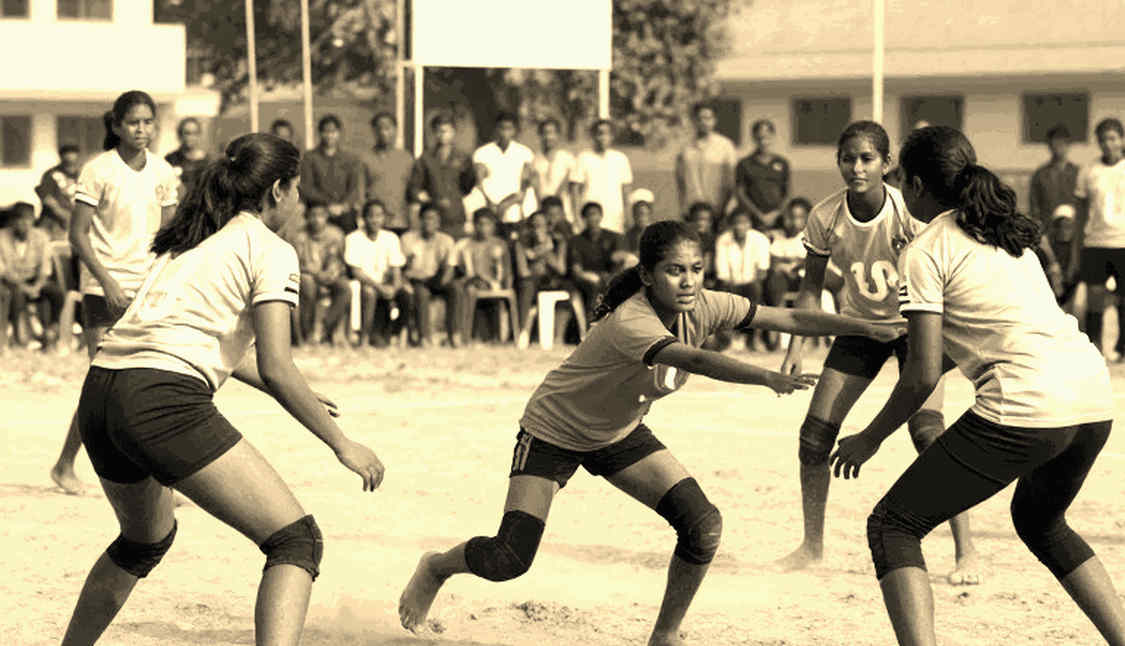
Sixty-four matches, one grid: that is how I learned to see a tournament. Judging anyone from one viral raid is not my method. A blowout semifinal is not a forecast for the final; it is only a blurred shadow of form.
So what do I watch on Saturday? The final is on September 26, 2026, a Saturday, against the winner of Iran versus Chinese Taipei. If Iran advance, the match becomes the only genuine test of India's title defence, and the media heat will spike into a rivalry-and-revenge frame. If Chinese Taipei advance, the gold is near-certain, and Nepal's semifinal appearance remains a small signal of regional development.
For me the real question is not on the scoreboard but in the structure. How long will women's kabaddi live on the Asian Games and Asian Championships alone? If Iran's raiders genuinely stretch India's defence on Saturday, the grid holds. And if India again end the match inside the first half, then we should understand — the problem lies with India's opponents, not on India's court.