
Asian Games 2026 Kabaddi: The Score Difference That Sent Bangladesh Home and Turned Iran Into a Warning
**মূল উত্তর:** এশিয়ান Games ২০২৬ পুরুষ কাবাডির সেমিফাইনালে উঠেছে ভারত, চাইনিজ তাইপে, ইরান ও থাইল্যান্ড — চার দলই পদক নিশ্চিত করেছে। গ্রুপ A-তে ২-২ নিয়ে শেষ করা তিন দলের মধ্যে স্কোর ডিফারেন্সে বাংলাদেশ ও জাপান বাদ পড়ে, দ্বিতীয় স্থানে ওঠে চাইনিজ তাইপে। **মূল তথ্য:** - গ্রুপ A: ভারত ৪-০ শীর্ষে; চাইনিজ তাইপে, বাংলাদেশ ও জাপান — তিন দলই ২-২, ফয়সালা স্কোর ডিফারেন্সে। - গ্রুপ B: ইরান ৪-০ শীর্ষে; থাইল্যান্ড ৩-১ নিয়ে কাবাডিতে দেশটির প্রথম এশিয়ান Games পদক নিশ্চিত করেছে। - পাকিস্তান ২-২ নিয়ে গ্রুপ B-তে তৃতীয়; এশিয়ান Gamesের ইতিহাসে প্রথমবার কাবাডিতে পদক ছাড়াই দেশে ফিরছে। - গ্রুপ পর্বের চতুর্থ দিনে: ইরান ৮৩-২৭ থাইল্যান্ড, ভারত ৩৭-২১ চাইনিজ তাইপে, জাপান ৬২-৩৫ দক্ষিণ কোরিয়া, নেপাল ৭৩-৫২ মালয়েশিয়া, ইরান ৫১-৩০ পাকিস্তান। - স্বর্ণপদক ম্যাচ ২৬ সেপ্টেম্বর; দক্ষিণ কোরিয়া ও মালয়েশিয়া শূন্য জয়ে আসর শেষ করেছে। **সূত্র:** Khel Now (khelnow.com) — এশিয়ান Games ২০২৬ পুরুষ কাবাডি গ্রুপ পর্বের চতুর্থ দিনের ম্যাচ রিপোর্ট। **সম্ভাব্য Next প্রশ্ন:** প্রশ্ন: এশিয়ান Games ২০২৬-এর পুরুষ কাবাডি সেমিফাইনাল কারা খেলবে? উত্তর: গ্রুপ A থেকে ভারত ও চাইনিজ তাইপে, গ্রুপ B থেকে ইরান ও থাইল্যান্ড। প্রশ্ন: পাকিস্তান কেন পদক পেল না? উত্তর: গ্রুপ B-তে ২-২ নিয়ে তৃতীয় হওয়ায় দুই কোয়ালিফাইং স্লটের বাইরে ছিল। প্রশ্ন: থাইল্যান্ডের অর্জন কী? উত্তর: ৩-১ রেকর্ড নিয়ে গ্রুপ B-তে দ্বিতীয় হওয়া এবং কাবাডিতে দেশটির প্রথম এশিয়ান Games পদক নিশ্চিত করা।
On the evening the group stage of men's kabaddi at the Asian Games 2026 closed, the Group A table stopped me at one line. Chinese Taipei 2-2. Bangladesh 2-2. Hosts Japan 2-2. One win each, one loss each, one semi-final slot available. The other two teams walked off the mat because of a small number.
The number mattered precisely because it was small.
Five teams, four matches each, ten matches, ten wins. India held four. The Republic of Korea held none. The remaining six were split between Chinese Taipei, Bangladesh and Japan, two each.
Now turn the table over. Korea lost all four matches, which means each of those three teams beat Korea, and that is one of their two wins. So where did the second come from? Only from the mini-league among themselves, and that is where the story bends. Chinese Taipei, Bangladesh and Japan each played the other two and won exactly one of those two games. The mini-league is a perfect cycle: one team beat the second, the second beat the third, the third beat the first.
A cycle means nobody actually outran anybody. A cycle means the table was settled by score difference — which is not a sport, it is an accounting entry.
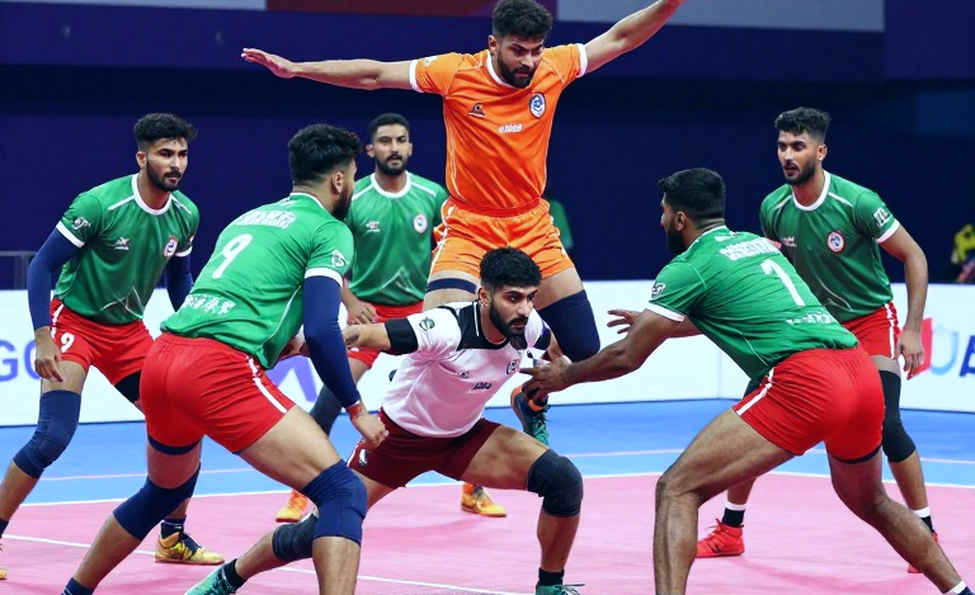
The final day began with Iran and Thailand. Iran won 83-27, ending Thailand's unbeaten run with a scoreline that no rotating seven could repair. Japan then closed their campaign by beating Korea 62-35. India beat Chinese Taipei 37-21, and the sixteen-point margin was small enough to keep Chinese Taipei alive; by evening that margin was their ticket. Nepal finally won, 73-52 over Malaysia, their only victory of the tournament. Iran closed Pakistan's medal hopes at 51-30.
The semi-final four: India and Chinese Taipei from Group A, Iran and Thailand from Group B. All four are guaranteed a medal. The gold medal match is on September 26.
I learned kabaddi on the mud in Dhaka and translate that, on a Bangalore desk, for the India market. Two decades of doing it taught me one thing: a kabaddi table is never a result sheet, it is a cost sheet — who has depth, who has length, and who owns the last ten minutes of a match.
Group A reads straightforwardly at first. India won four out of four. But inside the four-zip sits an awkward fact: India's least dominant performance came against Chinese Taipei, and that performance qualified them. India controlled the match, but when a sixteen-point gap suits both sides and your own qualification is already sealed, how much of a contest is that twenty minutes?
India's 4-0 is the least informative 4-0 of the tournament. It tells you nothing about how good India is; it tells you how high their floor sits.
Iran also went 4-0, but their four-zip came with 83-27 and 51-30 attached. In kabaddi those margins say two things at once. The raiding unit has replacements — when one raider tires, the next enters at the same tempo, which is among the hardest things in the sport. And the defence knows how to cover, because a blowout is not only raid points; it is super tackles, all outs, and breaking the opponent's revival loop.
Thailand's 3-1 is therefore not just a nice story; it is also a warning. Their first-ever Asian Games kabaddi medal is historic. The 56-point defeat to Iran shows the wall that still stands between their squad and the Iran-India tier. A team that wins three of four but loses the fourth 83-27 earns a medal; it earns a shot at gold only when every member of the raiding unit is of one standard.
This is where an old note from my crossover notebook returns. The last three strides of a javelin run-up and the last two steps of a raider before the baulk line are the same decision. In javelin you do not accelerate on the final stride; you hold rhythm, because the whole body must transfer into the arm. In kabaddi the raider's last two steps do exactly that — the speed does not drop, but a choice is made: slip the defender's ankle hold, touch the bonus line and turn, or take the do-or-die risk. When the 30-second clock enters its final five seconds, the raider's body dips slightly, one shoulder shifts, and that shift tells you whether he makes it. The camera misses it. Sitting mat-side, you catch it.
Group B holds Pakistan's story. Pakistan finished 2-2 and third. There is only one way to read the table. Korea won nothing, so Malaysia went 0-4; Nepal's only win was therefore against Malaysia, that 73-52; Nepal lost the rest to Iran, Thailand and Pakistan. Pakistan's two wins came against Nepal and Malaysia, their two defeats against Iran and Thailand. The sequence is forced; the remaining numbers allow no other reading.
For Pakistan this is the first Asian Games where they return without a kabaddi medal. Say the failure plainly before reaching for context: Pakistan's kabaddi problem is not talent, it is structure. There is no professional league, so a young raider gets no money, no coaching, no physio, no video analyst. A neighbouring system built a league and now treats the athlete's body as a project — workload monitored, fingers taped, knees strapped. Pakistan plays the whole tournament outside that system. That explains the defeat; it does not excuse it.
The tournament's biggest collapse is Korea's. Four matches, four losses. Kabaddi is not new to Korea, and their name once sat inside the medal conversation at these Games. What the mat showed was erosion: no raiding alternatives, no defensive rhythm, and an inability to recover once an all out lands mid-match.
Japan runs the reverse story. The hosts finished 2-2 and fourth, but their kabaddi has structure — years of investment, imported coaching, a domestic circuit, and a 62-35 win over Korea to close. Hosting pays out over four years, not one day; Japan's fourth place is a foundation, not a defeat.
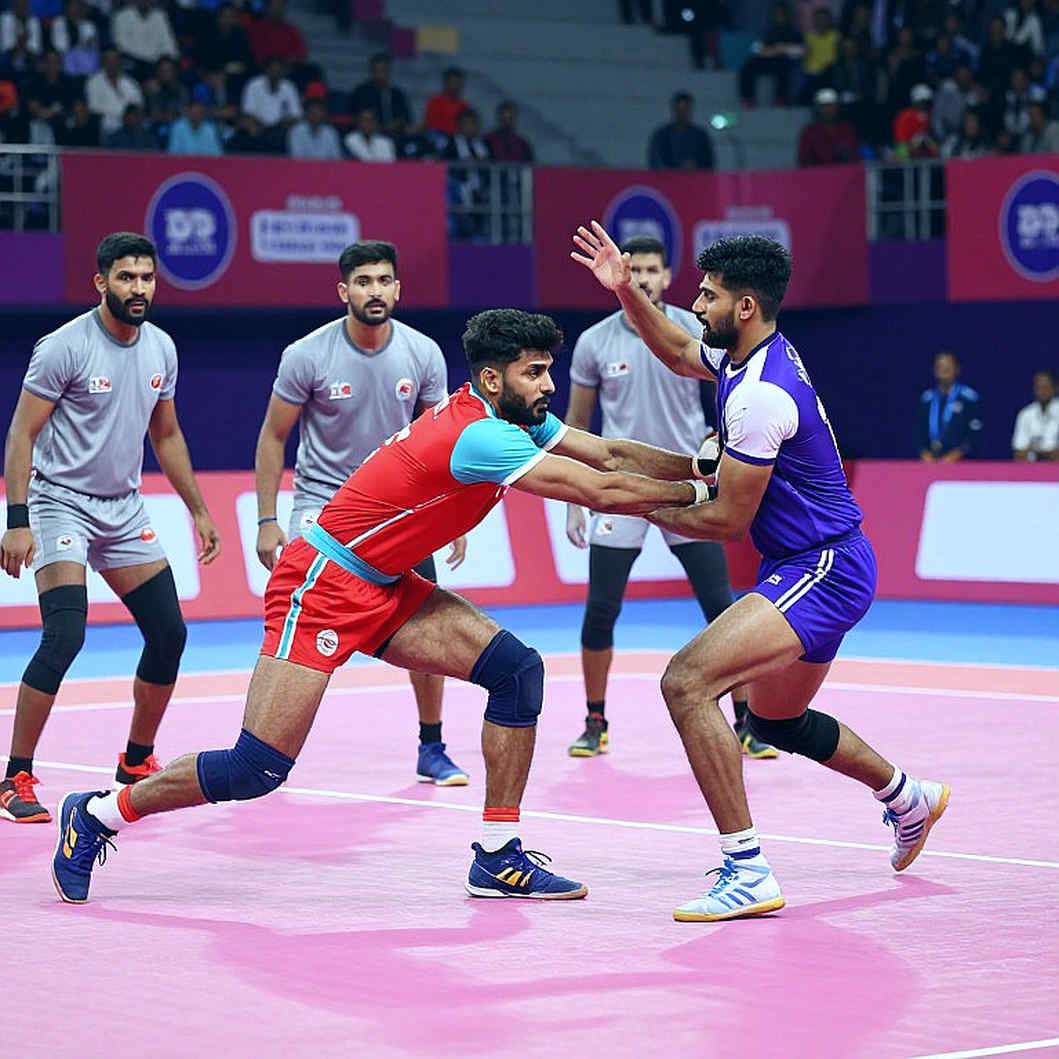
Bangladesh's line is the most uncomfortable one for this writer. 2-2, two wins, two losses, third. The distance from a semi-final was close to nothing. I know a boy who grew up on Dhaka's mud, learning to raid barefoot because there was no money for shoes. Some of that generation now plays for the national team, but what they lack is two players of equal standard for every position. And that is exactly where the difference tiebreak works against you.
Which brings us to the design question.
Score difference is a rule that punishes hardest precisely the teams that should be protected from it — the thin squads.
The logic is simple. To win by fifty or sixty you must maintain intensity across two twenty-minute halves without a dip. Seven elite players can win a match; they cannot win by a landslide, because in kabaddi a tired raider and a tired defender both cost. Deep squads manufacture all outs and super tackles and push opponents into do-or-die after do-or-die. Small federations win matches; they cannot manufacture margins. When win-loss records tie, the tiebreak is that margin — the one thing the small squad never had the tools to build.
In Group A this is not theory. Chinese Taipei lost to India by sixteen points, and those sixteen points delivered second place. Inside the same cycle, Bangladesh and Japan fought the same forty minutes, and then had to be separated by the difference between an acceptable defeat and an annoying one. Nobody proposes head-to-head first, because in a three-way cycle head-to-head says nothing. All three are equal. The last resort is score difference, which is depth.
And so the question reaches the tournament design itself. Two teams per group advance, and all four semi-finalists are already guaranteed medals. The group stage's only job is elimination. When five teams produce three exits, the biggest decision of the tournament is made by arithmetic, not by a sporting moment. Pakistan went out at 2-2, Korea at 0-4, Nepal at 1-3 — three different teams, one rule.
In a sport where every raid is a decision inside thirty seconds, letting that entire context hinge on a pre-computed margin is a design mismatch.
I have a habit: when a group stage ends, I do not just list the qualifiers, I count the points the eliminated teams never got to chase. The real event usually lives in that second list. In this tournament, the first name on it is Bangladesh.
The semi-final picture is clear. India, topping the group, meet Thailand; Iran meet the second qualifier. India face a raiding unit Iran has already broken; Iran face a team whose strength is keeping matches small and margins tight.
That raises the biggest question. Iran's 83-27 looks invincible. But 83-27 and 51-30 both came against teams that could not survive Iran's depth. Iran was never once forced to play twenty minutes under pressure, because they were never under pressure in their group. The same is true of India. Neither top side lost a match; neither won a match by two points. Nobody tested them. The test is scheduled for September 26.
The group stage at Asian Games 2026 crowned nobody and spared nobody — it only revealed how many players each system can afford.
Thailand is the cleanest reverse image. The team beaten 83-27 by Iran is the team that sealed its first-ever Asian Games kabaddi medal. Achievement inside defeat, a gap inside the achievement — the kabaddi table holds both truths at once.
Who plays the gold medal match on September 26 is still unwritten. One thing can be written down now: the side that frightened opponents with scorelines and the side that controlled matches through half-second decisions will settle which currency is worth more.
And for Bangladesh the question is entirely different. A team that finished with two wins and went home must build its next cycle not from a score difference but from a second row in the raiding unit. Without that, the next edition will seat them in the same box, counting the same numbers.